


A 90-Day Journal That Targets and Strengthens Core Executive Functions
In less than 5 minutes a day, your child gets structured practice in planning, time management, self-awareness and flexible thinking—so they can succeed in school and life without constant intervention.
If your child struggles with executive function skills — with or without an ADHD diagnosis — you've probably felt stuck on how to help them.
They’re smart, but daily life — for both of you — feels harder than it should.
The Executive Function Journal gives your child structured practice in planning, time management, organization, and flexible thinking—so they can navigate everyday life without constant intervention from you.
As Featured In

What Are
Executive Functions?
Planning
Task Initiation
Time Management
Flexible Thinking
Task Persistence
Working Memory
Executive functions are the cognitive skills behind planning, flexible thinking, task initiation, task persistence, time management, and working memory.
They're what allow your child to start tasks without reminders, bounce back from setbacks, manage time effectively, and handle daily responsibilities without constant reminders.
Kids with ADHD often struggle with executive functions, since the part of the brain where these skills live (the prefrontal cortex) is affected by ADHD. But, people without ADHD can also have poorly developed executive functions.
When these skills are weak, everything is harder—for your child and for you. The good news is that executive functions can be strengthened with consistent, structured practice.

Kids with Executive Dysfunction…
▶ Feel overwhelmed by even simple tasks
▶ Struggle with low confidence when they fall behind
▶ Appear unmotivated because they don’t know where to start
▶ Lack self-awareness about how their actions affect outcomes
▶ Become disorganized and lose track of responsibilities
▶ Are forgetful, even with important tasks
▶ Have trouble managing time, leading to constant stress

Good News: Executive Functions Aren’t Fixed.
They Can Be Strengthened with Consistent Practice.
Executive function skills are like muscles: they grow stronger with the right kind of practice.
The challenge is that most kids never get the chance to practice them in a structured, consistent way.
In 5 minutes a day, this 90-day journal helps your child build self-awareness — the foundation of executive functions. With structured, daily practice, they strengthen skills like planning, flexible thinking, task initiation, task persistence, time management, and working memory.
This isn't a homework planner or an academic tracker. It's 90 days of targeted daily prompts, designed to build the skills behind everyday independence — not just school.
That's exactly why I created the Executive Function Journal.
Why This Journal Works
(When Other Things Haven’t)
Most at-home approaches to building executive function skills don’t last.
We abandon planners after a month. Apps get boring. Nagging creates conflict instead of progress.
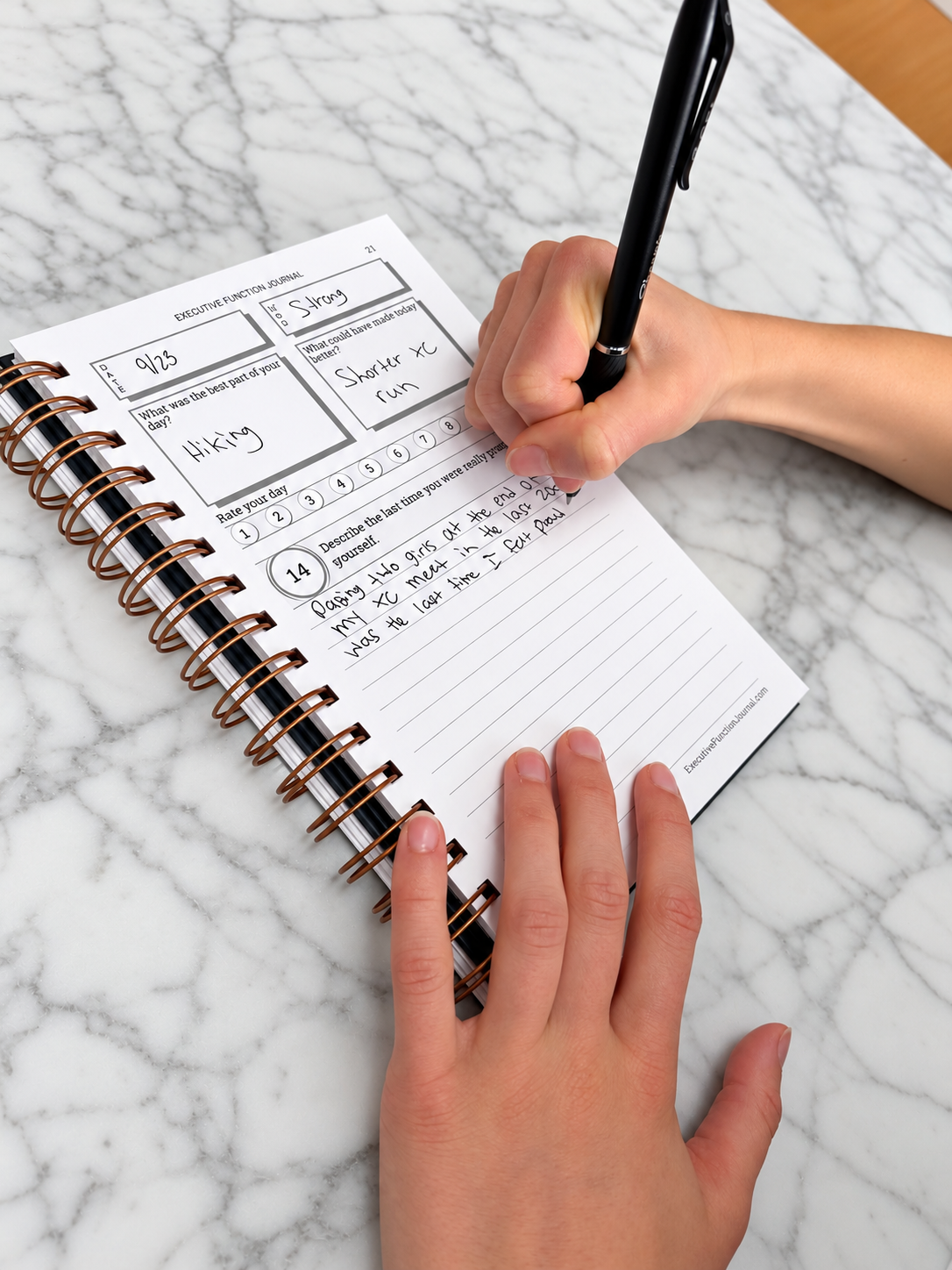
The Executive Function Journal is different because it:
Targets the root skill: self-awareness. Every prompt is designed to help students notice their own thoughts, actions, and patterns — the foundation of stronger executive functions.
Builds skills through repetition. Just like muscles, EF skills strengthen with consistent, bite-sized practice.
Feels doable. One page a day, less than 5 minutes. No overwhelm; no resistance.
Is grounded in expertise. Created by Katie Azevedo, M.Ed., an executive function coach with 20 years of experience helping students of all ages strengthen these exact skills.
That’s why parents say their kids actually use it — and why students start to see real growth in independence, focus, and confidence.
What Others Are Saying

How It Works
1. Get the Journal
Order the Executive Function Journal and get it shipped to your door within 4 business days.
2. Do the Daily Pages
Just one page a day. 5 minutes max. The power of the Executive Function Journal is in the routine.
3. Build Your EF Skills
Each page builds multiple EF skills through vocabulary challenges, reflection prompts, daily reviews, and self-assessment.
4. Repeat the Cycle
Executive functions grow with repetition. Journals are intended for consecutive usage. Finish one; start another.
What’s Inside the Journal?
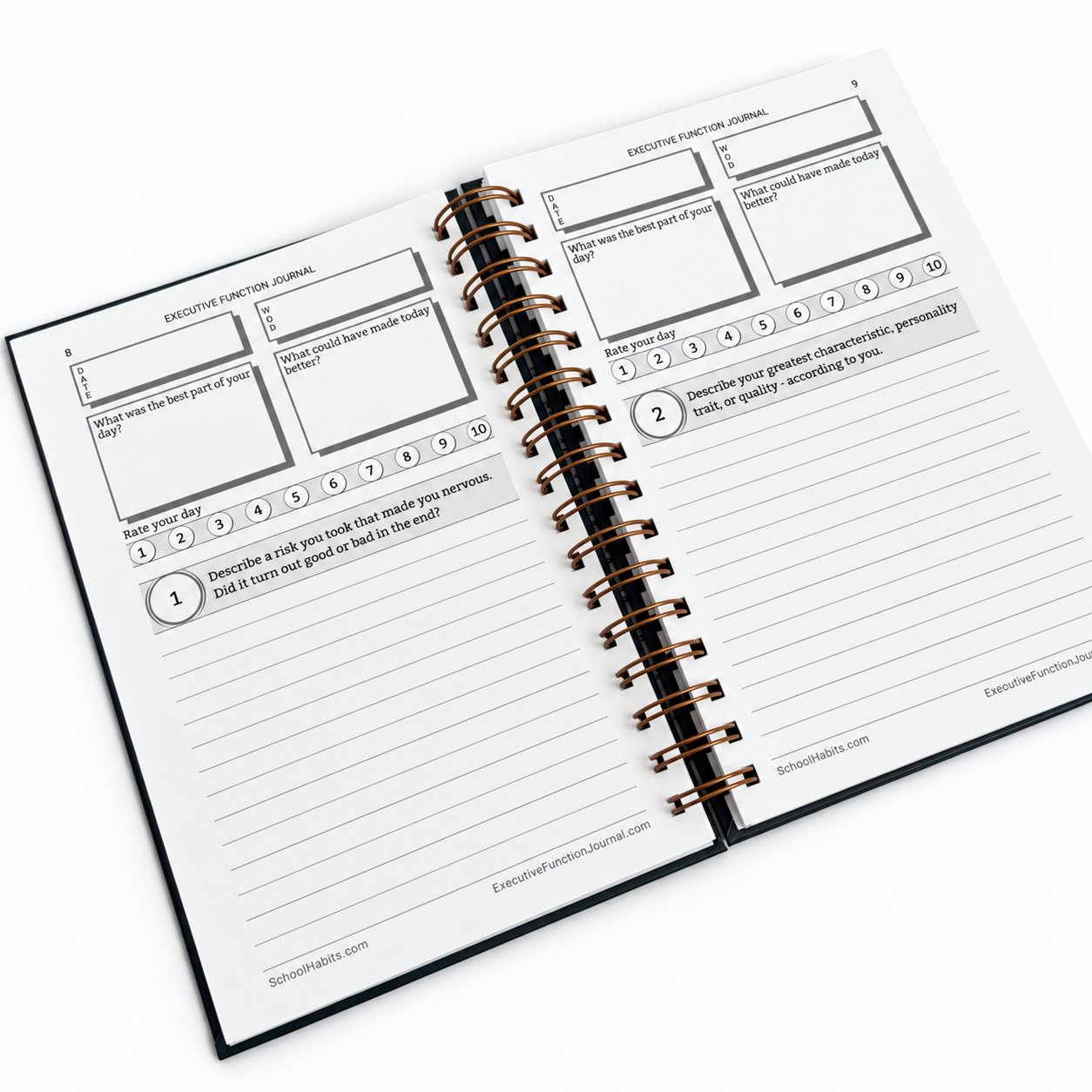
The Executive Function Journal is a research-based, 90-day journal designed to build real executive function skills through daily, structured practice — not homework help, and not an academic tracker.
Every page includes four targeted components designed by a special education and ADHD expert.
Word of the Day — your child sums up their entire day in a single word. Boiling a whole day down to one word forces them to weigh all that happened and decide what matters. This is a task in synthesis and self-awareness, not a vocabulary drill.
The Daily Prompt — 90 unique prompts across the journal. Some ask your child to sequence their priorities, some ask them to reflect on a mistake, some ask them to plan ahead. Every prompt is different, but each one is built on the same foundation: self-awareness.
Best Part of the Day — your child identifies what went right. Reflecting on what worked is the first step toward being able to repeat it. This is a practice in flexible thinking and planning, practiced in a quick, low-stakes task.
What Could Have Made Today Better? — your child uses working memory to reflect on what didn't go as planned, without judgment. That course-correction is exactly the kind of thinking that builds flexible thinking, impulse control and planning over time.
Self-Rating Scale — your child scores their whole day on a scale of 1 to 10. Condensing a full day into one number prompts them to reflect on, synthesize and organize their thoughts. This is true metacognition, with no writing or language required, so it works even when expressing it in words is the hard part.
The journal is designed for independent use, but works even better when parents are involved.
That's where the Companion Guide comes in.
Here's what this looks like for your kid:
✓ Initiate tasks independently (task initiation)
✓ Manage time and prioritize effectively (time management, planning)
✓ Adapt when plans change (flexible thinking)
✓ Retain and recall important information (working memory)
✓ Evaluate their own thinking and progress (self-awareness)
What’s Inside the Companion Guide?

The Executive Function Journal Companion Guide is your roadmap for supporting your child without hovering, nagging, or taking over — built specifically to go with the journal, not to replace it.
It gives you the exact prompts, conversation starters, and strategies you need to help your child succeed — while building their independence, not dependence on you.
The Companion Guide helps you:
✓ Turn "I don't know" into real answers — with alternative questions and sentence starters
✓ Reduce resistance and power struggles — by understanding what's driving the frustration
✓ Create meaningful conversations, not interrogations — connection, not compliance
Prompts, cues, and sentence starters for all 90 journal prompts — so you never have to guess what to say when your child gets stuck
Accommodations for ADHD and learning disabilities — so the journal works for YOUR child, not just neurotypical kids
4 Word of the Day option lists — ready-made words for the days your child says "I don't know what to pick," with zero extra prep
Example journal entries — so you can see what "good enough" actually looks like, and you’re never starting from square one
An FAQ for roadblocks — what to do when your child refuses, forgets, or says "this is stupid"
The Companion Guide is built to go with the Executive Function Journal. It's available bundled together.
Who It’s For
Whether or not your kid has a diagnosis, if executive function is the challenge, the Executive Function Journal helps.
For kids in grades 1 through college. These skills matter at every age.
For kids with ADHD, learning differences, or no diagnosis at all. If executive function is the challenge, this helps.
For parents, teachers, and specialists who want a simple daily tool.
More Testimonials
The Journal is designed for 90 days of use. You'll start a fresh journal every 90 days, but only need one Companion Guide—it works with every journal.
Get the Journal alone, or bundled with the Companion Guide. The Best Value Bundle gives you a full year of practice at the lowest price per journal.
Choose Your Best Option
The Executive Function Journal is a research-based, 90-day journal designed to develop critical executive function skills through daily and consistent use.
This unique journal features 90 daily pages that repetitively address critical cognitive skills including self-reflection, metacognition, planning, organization, prioritizing, flexible thinking, emotional intelligence and more.
Each daily page has a unique writing prompt that targets multiple executive functions and engages the working memory. In addition to the writing prompt, each daily page features a series of four quick and accessible repetitive reflective exercises that directly activate core executive functions.
Simple. Accessible. In less than 7 minutes a day, your child can learn skills to operate independently and succeed confidently.
Hardcover
Metal coil binding
Dimensions: 5.5 x 8.5
Undated; start any time
Full introduction pages for getting started
90 unique journal pages
4 daily components plus a journal prompt per daily page
Spacious lines to accommodate larger handwriting
Perfect for left-handed writers
Discrete monochromatic cover
Intended for users in first grade through adulthood, with or without ADHD
Approximate weight: 13.5 ounces
Executive Function Journal Companion Guide not included
Best For: Self-directed people who don't need parent support.
Includes: 1 Journal
The Executive Function Journal is a research-based, 90-day journal designed to develop critical executive function skills through daily and consistent use.
This unique journal features 90 daily pages that repetitively address critical cognitive skills including self-reflection, metacognition, planning, organization, prioritizing, flexible thinking, emotional intelligence and more.
Each daily page has a unique writing prompt that targets multiple executive functions and engages the working memory. In addition to the writing prompt, each daily page features a series of four quick and accessible repetitive reflective exercises that directly activate core executive functions.
Simple. Accessible. In less than 7 minutes a day, your child can learn skills to operate independently and succeed confidently.
Hardcover
Metal coil binding
Dimensions: 5.5 x 8.5
Undated; start any time
Full introduction pages for getting started
90 unique journal pages
4 daily components plus a journal prompt per daily page
Spacious lines to accommodate larger handwriting
Perfect for left-handed writers
Discrete monochromatic cover
Intended for users in first grade through adulthood, with or without ADHD
Approximate weight: 13.5 ounces
Executive Function Journal Companion Guide not included
MOST POPULAR
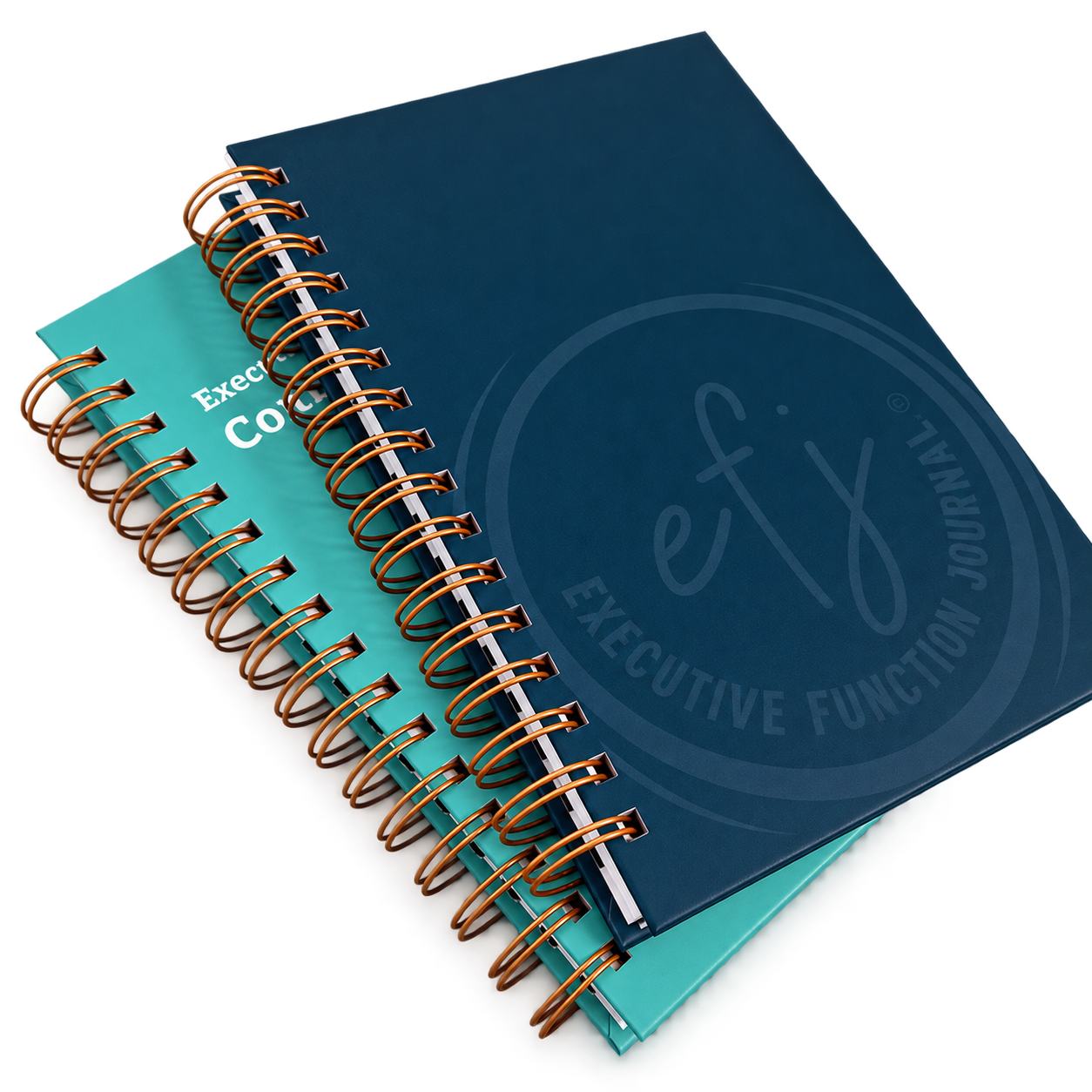
Maximize your Executive Function Journal experience and results with the Executive Function Journal Companion Guide, a supplementary resource for parents, guardians, and instructors helping a child use the journal. The bundle includes one journal and one companion guide, perfect for users new to the EFJ system.
One Executive Function Journal
One Executive Function Journal Companion Guide
Undated; start any time
Both books are hardcover with metal coil binding
Dimensions of each: 5.5 x 8.5
Approximate weight: 26 ounces
SAVE $20
Best For: Parents who want to guide their child through the process
Includes: 1 Journal and 1 Companion Guide
Maximize your Executive Function Journal experience and results with the Executive Function Journal Companion Guide, a supplementary resource for parents, guardians, and instructors helping a child use the journal. The bundle includes one journal and one companion guide, perfect for users new to the EFJ system.
One Executive Function Journal
One Executive Function Journal Companion Guide
Undated; start any time
Both books are hardcover with metal coil binding
Dimensions of each: 5.5 x 8.5
Approximate weight: 26 ounces
BEST VALUE
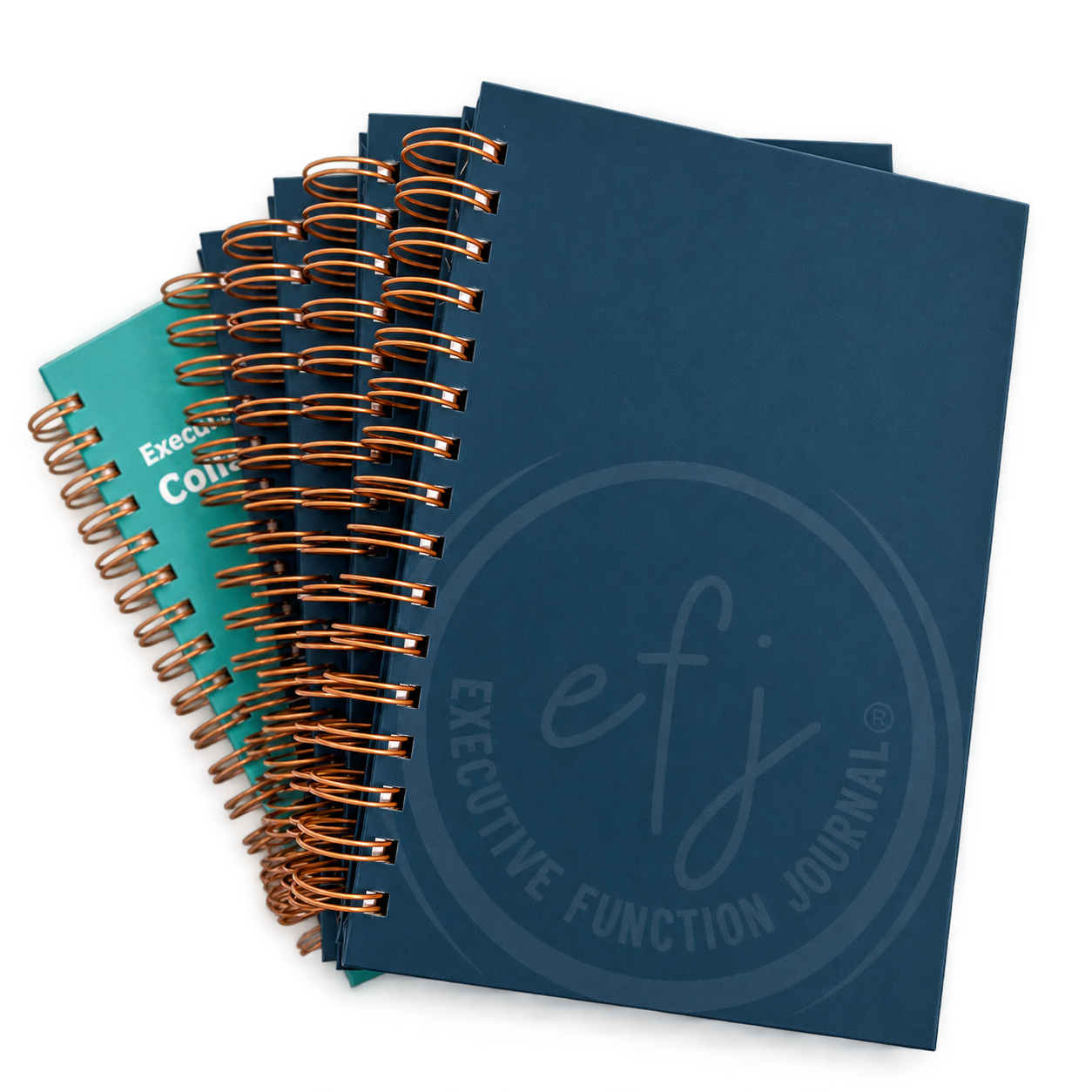
The ultimate full-year system. Developing executive function skills requires repetition; therefore, the journals are intended for consecutive usage. Each journal contains 90 daily pages; the Best Value Bundle includes 4 journals for a full year of uninterrupted journal usage (360 days total), plus an Executive Function Companion Guide. The Best Value Bundle is also an ideal and economic option for families with more than one child engaged in the EFJ system.
4 single Executive Function Journals (a one-year supply)
1 Companion Guide
Hardcover with metal coil binding
Undated; start any time
Full introduction pages for getting started
90 unique journal pages per journal
4 daily components plus a journal prompt per each daily page
Spacious lines to accommodate larger handwriting
Perfect for left-handed writers
Discrete monochromatic cover
Intended for users in first grade through adulthood, with or without ADHD
Dimensions: 5.5 x 8.5
Approximate weight per journal: 13.5 ounces each, or 3.25 lbs for all 4
SAVE $100
Best For: Families, educators, or therapists
Includes: 4 Journals and 1 Companion Guide
The ultimate full-year system. Developing executive function skills requires repetition; therefore, the journals are intended for consecutive usage. Each journal contains 90 daily pages; the Best Value Bundle includes 4 journals for a full year of uninterrupted journal usage (360 days total), plus an Executive Function Companion Guide. The Best Value Bundle is also an ideal and economic option for families with more than one child engaged in the EFJ system.
4 single Executive Function Journals (a one-year supply)
1 Companion Guide
Hardcover with metal coil binding
Undated; start any time
Full introduction pages for getting started
90 unique journal pages per journal
4 daily components plus a journal prompt per each daily page
Spacious lines to accommodate larger handwriting
Perfect for left-handed writers
Discrete monochromatic cover
Intended for users in first grade through adulthood, with or without ADHD
Dimensions: 5.5 x 8.5
Approximate weight per journal: 13.5 ounces each, or 3.25 lbs for all 4
Hi, I’m Katie Azevedo, M.Ed.
AS FEATURED ON


✓ Over 3,000 one-on-one students
✓ Over 20 years of teaching experience
✓ Master’s Degree in Special Education
✓ ADHD and executive function expert
✓ Former public high school special education teacher
✓ Host of the Learn and Work Smarter podcast
✓ Mother of two teenagers
Ready to Get Started?
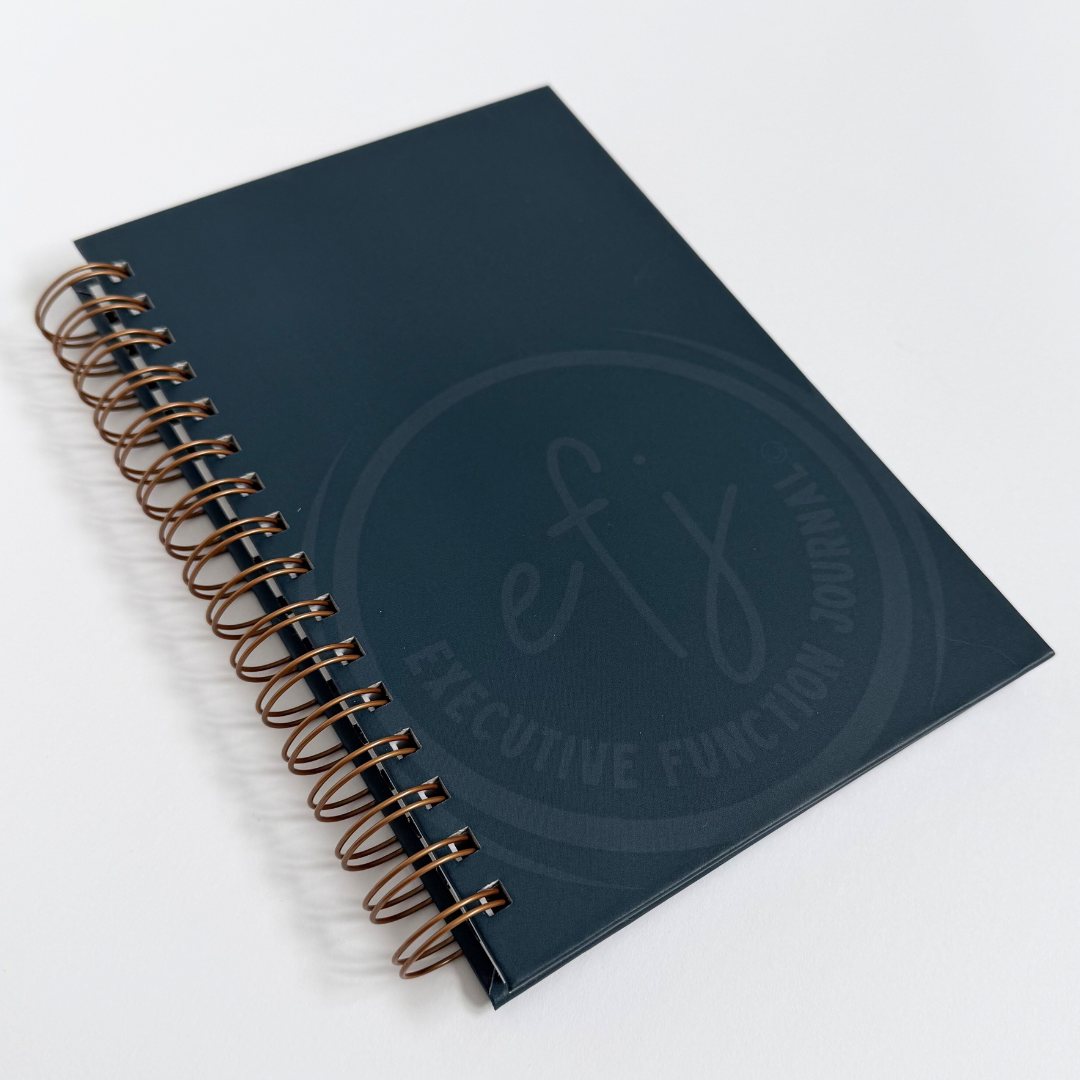
Give your child a 90-day head start on the skills that make everything else easier. Start today, not someday. In stock and ships within 4 business days.
In 5 minutes a day, your child will:
Build self-awareness — the foundation of executive function skills.
Strengthen planning, organization, and flexible thinking.
Grow independence and confidence that carry into school and life.
No complicated systems. No extra nagging. Just one page a day.
And the peace of mind knowing that you’re doing right by your child.
FAQ: Still Have Questions?
-
What ages is the Journal for?
The Journal is designed for students from about 1st grade through college, and even adults. The prompts are flexible enough to meet kids where they are. -
Will this work if my child has ADHD?
Yes! In fact, the Journal was created with students who struggle with ADHD and executive dysfunction in mind. The daily prompts are short, accessible, and repeatable — making them ADHD-friendly. -
What if my child won’t stick with it?
Each page takes less than 7 minutes. The structure is designed to feel doable, not overwhelming — and many parents are surprised by how quickly it becomes part of their child’s routine. -
Do I need to guide my child through it?
No. The Journal is designed for independent use. Your role is simply to provide the Journal and encourage the routine. The prompts and structure do the teaching.If your child needs significant supports, purchase the journal with the Executive Function Journal Companion (available after checkout … it will pop up as a “Bundle” option with the EJF and Companion Guide together).
-
How long does it last?
Each Journal includes 90 daily pages — about three months of practice. Many families continue with a second Journal to keep the momentum going. -
How is this different from a regular planner or diary?
Planners track tasks, and diaries capture thoughts. The Executive Function Journal is different — it’s built by an executive function coach and specifically trains the mental skills behind independence, planning, and organization. -
When will I receive my order?
Journals ship within 4 business days, and you’ll get tracking information as soon as it’s on its way. -
Executive functions are the cognitive skills behind impulse control, flexible thinking, motivation, task endurance, organization, focus, and self-management. They're what allow your child to start tasks independently, bounce back from setbacks, manage time effectively, and handle daily responsibilities without constant reminders. When these skills are weak, everything is harder—for your child and for you. The good news? Executive functions can be strengthened with consistent, structured practice.